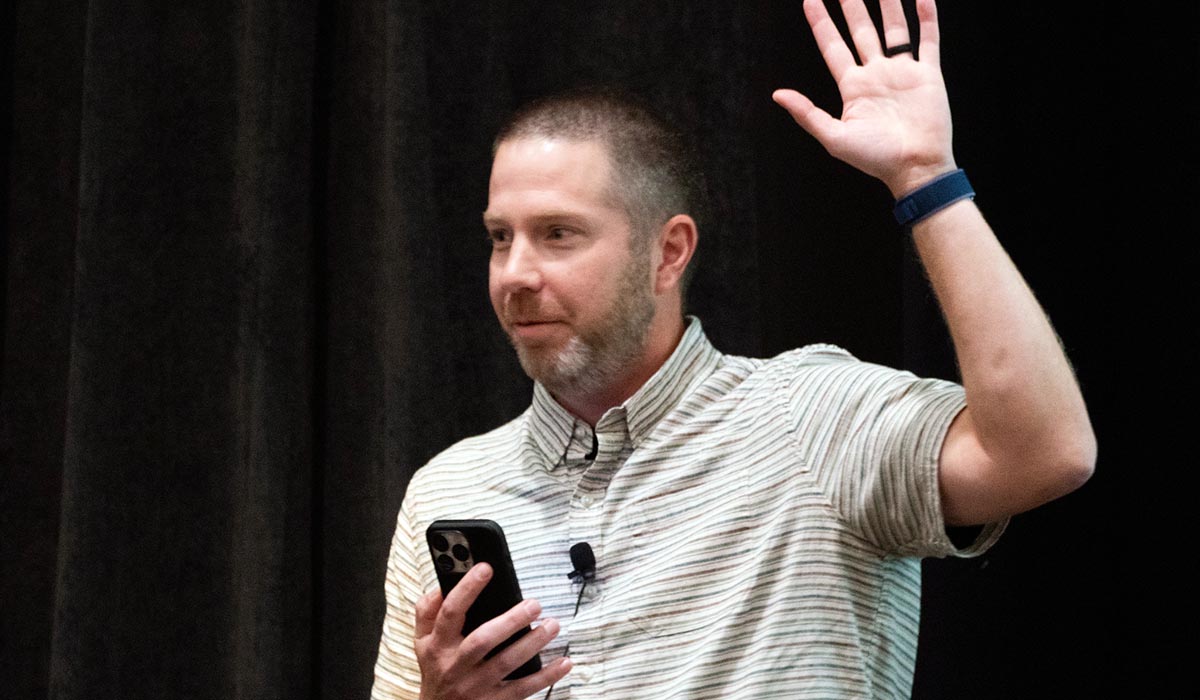
Kris Hardy, director of web and digital marketing with Messiah University, used real-world examples from his small team at Messiah to ensure his audience left with actionable items they could do today to help improve the search engine optimization (SEO) of their websites.
Using branded versus non-branded keywords as a starting point, he dove into simple steps we can all take to ensure our audiences can easily find the information they need on our sites. In an ever more information-saturated world, remembering that “confusion costs you conversions” should be top-of-mind!
Here are just a few tips and tricks to add to your SEO arsenal, with each more important than ever in the expanding AI age:
Be specific with your page titles
- Conduct a page title audit using your Google analytics data to review the page titles in your ecosystem
- Find and address areas of confusion (e.g., “Contact Us” should be department specific)
- Use a standard page-title naming convention to avoid reintroducing issues
- Include student types in page titles and descriptions where appropriate (e.g. graduate student tuition vs. undergraduate student tuition)
- Use words that make sense to your audience not just ones that were chosen for internal, or external, political reasons (e.g., cost of attendance words required by law or “affordability” when tuition is the actual search term your students use)
- Use Google search terms to see what your audience is searching for to find your information
Prioritize the pages that matter most
- Remember that your product is your programs—prioritize those pages!
- Take the time to conduct your keyword research. It’s important to see what people are looking for that is relevant for your programs
- Incorporate keywords into your program pages
On-page optimization
To maximize the power of your on-page content, create a keyword blueprint! This can include:
- Title tag
- H1, H2 and H3 heading structure
- Friendly (readable) URLs
- Useful introductory text (a great place to hit possible keywords in text)
Check to see if other pages are outranking your program pages for program-based keywords. Consider reducing visibility for pages that don’t provide important program content to help elevate those key product pages.
Use tools to gain insight
- SemRush is pricey per seat but provides valuable insight
- Moz, ahrefs and Mangools can also be helpful
- Use Looker Studio reports to combine data; it’s helpful to view a year-over-year comparison
- A free Google Ads account helps drill into keywords
- If you notice links going to the wrong location on another website, it’s okay to ask the linking website to make an update!
Whatever tool you use, look for what your students are looking for and how they’re landing on your key program and information pages.
In short, in a world where information is currency, and accuracy is key to credibility, Kris’ session provided simple tools we can all use to help ensure that our information is where it needs to be for our intended audience!
Session Recordings + Professional Development Library
Paid membership provides unlimited on-demand access to session recordings. The Professional Development Library includes all recordings from the 2025 Annual Conference and other conferences.
Link Journal has covered the HighEdWeb Annual Conference since 2011. Explore our archives for articles about previous conference sessions.