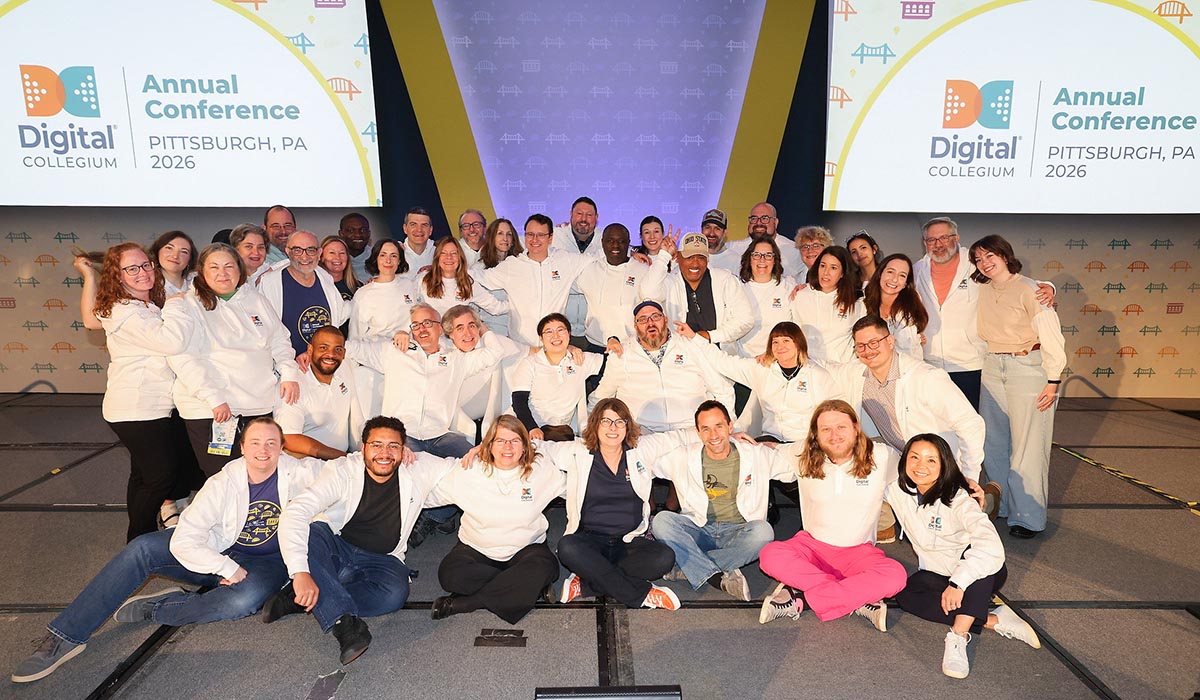
I’ve been attending Digital Collegium’s annual conference for years, but this year felt different. Maybe it was the more intimate atmosphere. Maybe it was the conversations. Or maybe I simply gave myself more room to slow down, lean in and experience everything this community has to offer.
Whatever it was, I walked away with a renewed appreciation for the people and the work happening across higher ed digital.
And a whole lot of notes.
Are we asking the right questions?
One thing I appreciated about this year’s conference was the shift toward practical conversations. There was plenty of talk about AI (because, let’s face it, we can’t escape it), but what stood out was how often presenters moved beyond the big ideas to share what we can actually do with them.
In “BYOB: Be your own benchmark,” Courtney Witmer from Penn State challenged us to rethink how we measure success. We spend so much time comparing our performance to industry benchmarks, but are those comparisons actually telling us anything useful? Sometimes the better question isn’t “Is that good?” but “Are we getting better?”
That same thinking carried into conversations about AI and search. In “As AI steals the click, steal back the answer,” Tera Buckley from the University of North Dakota explored what happens when prospective students get the information they need without ever visiting our websites. If clicks are no longer the whole story, how should we define success?
For me, these sessions reinforced something important: The way we measure our work needs to evolve alongside the way people experience it.
“This year’s conference reminded me that professional growth doesn’t always come from another presentation or a new tool. Sometimes it comes from giving yourself the space to be curious, ask questions and connect with people who understand the work you’re doing.”
New technology. Same fundamentals.
AI was everywhere, but I noticed an interesting tension. We’re excited about what’s possible, a little exhausted by the conversation and still trying to figure out what it all means for our day-to-day work.
Sessions about AI search, content strategy and even spotting AI-generated “slop” in creative work kept bringing me back to the same thought: We can’t automate our way around knowing our craft.
Good content still needs a purpose. Strong brands still need consistency and authenticity. Websites still need to answer real questions from real people.
I especially appreciated the conversations about making institutional websites worth the click, creating content that answers the questions students are actually asking and maintaining the human judgment that makes our work meaningful.
The tools are changing quickly. Our responsibility to the people we’re trying to reach hasn’t.
The people behind the work matter just as much.
Another session that stuck with me was “Same destination, different maps,” a conversation about creating alignment in institutional-vendor partnerships. While the discussion centered on outcomes, decision-making and shared responsibilities, the underlying message was much bigger.
Good work happens when people trust each other, communicate openly and understand what they’re working toward.
“Good content still needs a purpose. Strong brands still need consistency and authenticity. Websites still need to answer real questions from real people.”
I saw that same spirit in the conversation about preserving individuality within UNC’s institutional brand. Giving people the tools, flexibility and confidence to make good decisions can be just as important as the guidelines themselves.
And honestly, that’s what makes Digital Collegium so special.
This is a community of people who willingly share what’s working, talk about what’s not and help each other figure out what’s next. There’s no expectation that anyone has all the answers. Just a shared commitment to learning and making the work better.
We take our work seriously, but never ourselves.
If I had to describe this community in one sentence, that would be it.
We can spend the morning digging into analytics, debating the future of search or talking through complicated campus challenges, then spend the evening exploring the Heinz History Center, singing karaoke or challenging each other to a little Dance Dance Revolution.
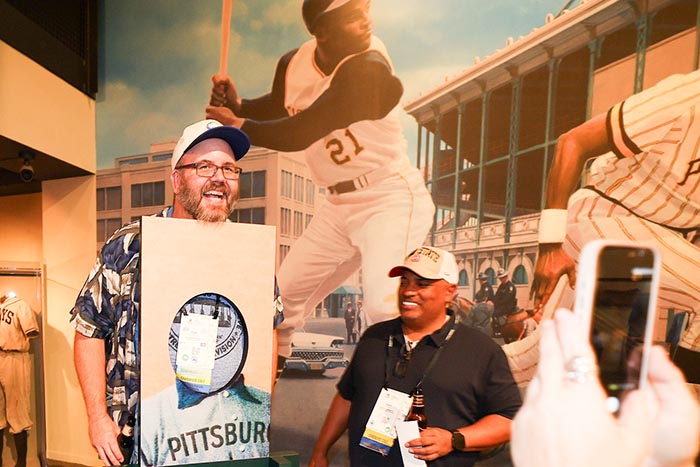
That’s something Digital Collegium does incredibly well. The experience doesn’t stop when the sessions end. Just as much thought goes into creating opportunities to connect, have fun and build relationships as it does into the content we come to learn from.
This year’s conference reminded me that professional growth doesn’t always come from another presentation or a new tool. Sometimes it comes from giving yourself the space to be curious, ask questions and connect with people who understand the work you’re doing.
After years of attending, I found myself experiencing Digital Collegium in a new way. I left with practical ideas I can’t wait to put into action, new perspectives to consider and an even greater appreciation for this community.
And perhaps that’s the biggest takeaway of all. We don’t have to figure out the future of higher ed digital on our own. We have each other.