
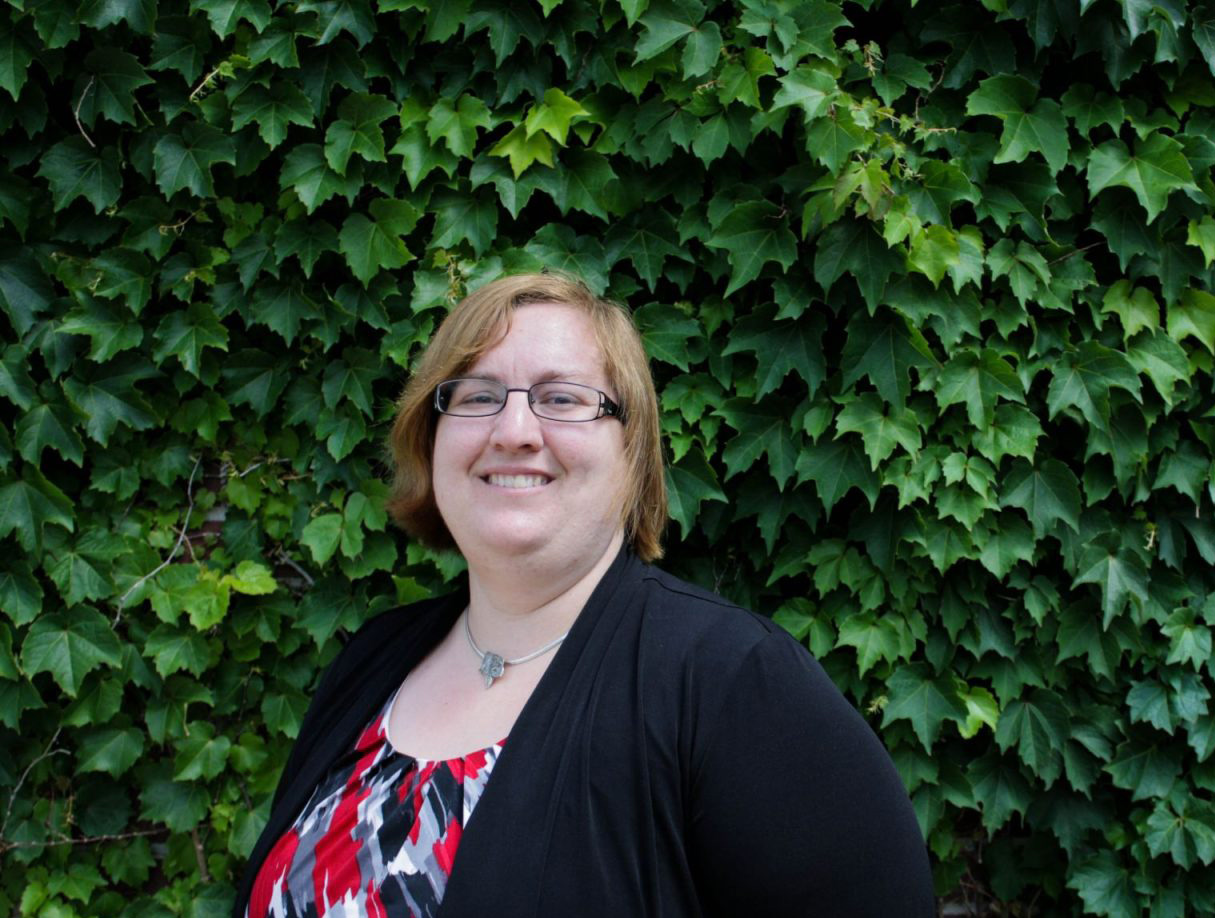
For the upcoming Accessibility Summit, Link Journal writer Tim Nekritz asked event chair Jen Bethmann, web accessibility coordinator for Illinois State University, five questions about the July 28 online event and Bethmann’s journey to becoming an accessibility champion.
Photo courtesy of Illinois State University.
Q. To start with an incredibly basic question, why is accessibility important?
How can it not be important? As the world continues to move more activities into digital spaces, we must ensure that everyone not only has equitable access, but also an experience that is meaningful, understandable and inclusive.
Q. Why should somebody want to attend the Accessibility Summit?
Digital Collegium’s Accessibility Summit is a great way to help digital professionals solve accessibility challenges, specifically in higher education (though topics can help a wider range of professionals).
Max, Erika and Neal on our program team have worked to ensure our one-day online event covers topics including accessibility tools, strategy and governance, design practices and more. Our keynote session, featuring Reginé Gilbert, explores the limits of AI-driven accessibility testing and emphasizes designing for real people and overlooked user experiences.
The day’s presentation schedule has something for everyone, from those just starting out to those who have been in the field for a while. Personally, while I have been involved with accessibility for a decade now and part of this committee for nearly half that time in various roles, I still learn from presentations each year. I continually find “golden nuggets” to take back to my campus to help us continue our accessibility journey.
“The day’s presentation schedule has something for everyone, from those just starting out to those who have been in the field for a while…I continually find ‘golden nuggets’ to take back to my campus to help us continue our accessibility journey.”
Summits like ours that are specific to accessibility allow us to share efforts from basic accessibility practices to more nuanced topics like Advancing Audio Description (Aimee Brown-Shadduck and Cindy Camp) and Accessible Math (Nicholas McNab and John Williams).
Though populations of institutions may vary, accessibility is a collective effort. The more we can share ideas and common practices that have succeeded for others, the more people can engage with digital activities throughout all campuses, both inside and outside the classroom.
Q. Accessibility is obviously a hot topic already with the Title II requirements, but this summit and the organization’s emphasis on accessibility have been around much longer. As a wider range of people focus on the field, what audience would benefit most from attending the summit?
A. Though updated ADA Title II requirements in the United States may have placed a spotlight on digital accessibility and are driving institutions in the U.S. to move toward upcoming compliance deadlines, the need for inclusive digital experiences extends far beyond compliance. Established global regulations such as the European Accessibility Act and the Accessible Canada Act remind us that accessibility is an ongoing effort.
To help with these efforts, the topics covered in this year’s Accessibility Summit provide insights into common and innovative digital accessibility tools, guidance on strategy, policy and governance for campuses as well as foundations of accessible design and content creation. We wanted the Accessibility Summit to be a place where anyone of any level of experience can find their “golden nugget(s)” to help their campuses and communities thrive on their accessibility journeys.
From those working on Building a Culture of Accessibility (Lee Ann Dickerson and Jen Wagner) to those deep in the code running End-to-End Accessibility Tests (Carly Gerard), we hope to provide a day of community and information sharing. Presenters will be available to answer questions and engage in the online chat on the day of the Accessibility Summit. All videos will be available for attendees to revisit for several weeks after the Accessibility Summit, so people can catch other presentations they may have missed during the day.
Q. How did you find yourself on this journey to working in accessibility and now coordinating a conference for the field?
A. In 2015, I found myself at a cross-roads in my life that drove me to take a leap of faith and go to grad school in my mid-thirties. I was fortunate to receive a graduate assistantship with the then Office of Disability Concerns (now Student Access and Accommodation Services) at Illinois State University.
There I worked with the dedicated staff for two years helping caption course videos for students and converting books and articles into accessible content. I met my good friend Nicole Courter (née Yarmolkevich) who showed me in very real ways how difficult the digital world can be when it is not designed to be accessible. The difficulties and barriers she experienced on a daily basis while navigating digital spaces with a screen reader were a constant struggle.
“The more we can share ideas and common practices that have succeeded for others, the more people can engage with digital activities throughout all campuses both inside and outside the classroom.”
By the time I graduated, Illinois State had created a new position that I applied for, becoming the inaugural web accessibility coordinator. For the last near decade, I have served as a campus resource for understanding and promoting digital accessibility best practices, including reviewing digital technologies for accessibility barriers, advocating for accessibility practices and training teams across campus.
Though I do not identify as having a disability myself, I am adamant that my team actively hires individuals with disabilities to help us review products for real experiential feedback. Through the years, my student workers and graduate assistants have shared their personal experiences to shape my and Illinois State’s accessibility journey. This includes my current GA, Ethan Edwards, who presented at last year’s summit.
I continue to advocate that technology and digital content should be created for everyone’s use, regardless of their situation or ability, and hope to empower others with the knowledge and tools to do so.
As for how I came to be part of Digital Collegium’s Accessibility Summit, that is a bit shorter of a story. Lindsey Sneed recruited me for the 2022 summit as the Accessibility Coordinator. From there, I have served in the roles of Registration Coordinator, Vice Chair and now Chair.
Q. What are you personally looking forward to most about the Accessibility Summit?
A. The actual day of the summit is a bit of a blur for those of us on the committee, as we are also actively working behind the scenes to make sure the event runs smoothly. That said, I am eagerly awaiting the final presentations and looking forward to finding this year’s “golden nugget(s)” to share with my campus and community.
Want to learn more?
Digital Collegium’s 2026 Accessibility Summit will take place on Tuesday, July 28. For more information or to register, visit the Accessibility Summit website.